Why Pet Fur Suddenly Sticks to Everything When the Seasons Change
Quick Answer: Two things happen at once as summer ends — pets shed their summer coat, and indoor air starts drying out as humidity drops and heating begins. The drier air lets fabrics hold a much stronger static charge, so the same amount of fur clings dramatically harder than it did in August. Adding humidity back is the single most effective fix, and it addresses the cause rather than the symptom.
Most people blame the shedding entirely, which is why the usual solutions underperform.

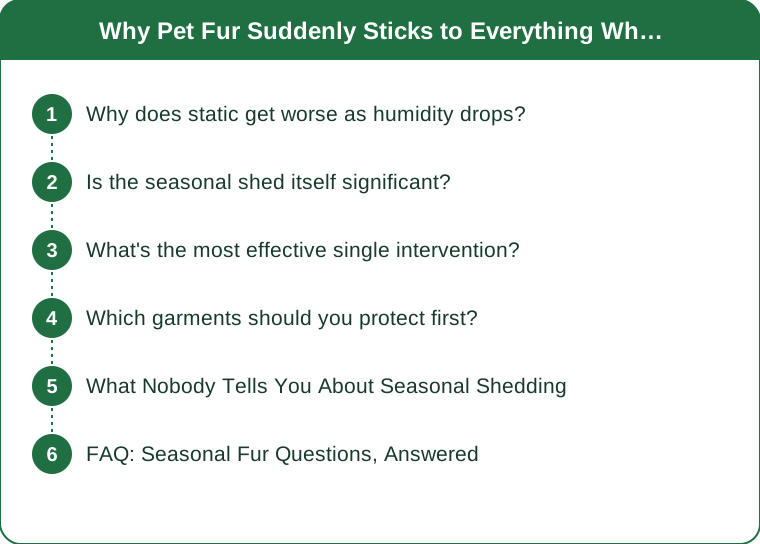
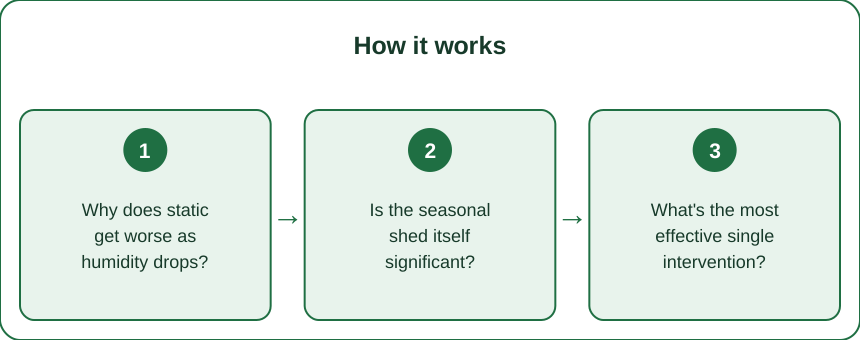
Why does static get worse as humidity drops?
Water vapor in the air makes surfaces slightly conductive, which lets accumulated static charge dissipate continuously instead of building up. In humid air, charge leaks away almost as fast as friction generates it.
As relative humidity falls — which happens both from the seasonal change and from indoor heating — that dissipation pathway largely disappears, and charge accumulates. A fabric that would have held a negligible charge in August can hold enough by October to attract fur from several inches away and hold it firmly against gravity. The shedding may only have increased modestly; the adhesion increased enormously.
Is the seasonal shed itself significant?
It’s real and it’s substantial for double-coated breeds especially. Many animals shed their lighter summer coat as daylight hours shorten, which is triggered by light exposure rather than by temperature — so the shed begins before the weather actually cools.
But the shed is a weeks-long process that ramps up gradually, while the static change can happen over a few days once heating starts. That mismatch is why the problem often feels like it appeared overnight. Managing both matters: more frequent brushing addresses the volume of loose fur, while humidity addresses how strongly whatever fur is present adheres.
What’s the most effective single intervention?
Raising indoor humidity into the 40-50 percent range. It addresses the actual cause, and it improves several unrelated things at once — static shocks, dry skin, and dry sinuses all respond to the same change.
A room humidifier where you dress and where the animal spends most time covers most of the benefit. Beyond that, brushing frequency is the highest-value habit — fur removed at the source never reaches the fabric. Ten minutes of brushing during a heavy shed removes more fur than an hour of lint-rolling afterward, and a de-shedding tool that reaches the undercoat does substantially more than a surface brush.

Which garments should you protect first?
Anything brushed, fleecy, or with a raised surface — those combine the highest static generation with the most mechanical grip, so they collect fur fastest and release it slowest.
Practically, that means storing brushed layers and fleece in a closed closet or drawer during heavy shed periods rather than leaving them out. Smooth, dense knits can stay accessible since they release fur easily. And anything you’ll wear outside the house should get a final pass right before leaving — fur picked up while sitting down to put on shoes is a genuinely common last-minute addition that a quick rubber-glove pass removes in seconds.
What Nobody Tells You About Seasonal Shedding
Indoor pets shed year-round but still follow a seasonal pattern, driven by artificial light exposure rather than natural daylight. The cycle is less pronounced than for outdoor animals but it’s still there.
Bathing during a heavy shed loosens more fur than it removes in the short term, so brushing before and after a bath matters more than the bath itself.
Static-attracted fur returns to a garment faster after removal in dry conditions — which is why lint-rolling something and finding it covered again ten minutes later is a genuinely common experience. Neutralizing the charge with a damp cloth or anti-static spray is what stops the cycle.
FAQ: Seasonal Fur Questions, Answered
Does more frequent brushing actually reduce fur on clothing?
Significantly — it’s the highest-leverage habit available, because it removes loose fur before it can transfer anywhere.
Do air purifiers help with pet fur on clothing?
They help with airborne dander and fine hair but do little for fur that transfers by direct contact, which is most of what ends up on clothing.
Should I change laundry routines during heavy shed season?
Yes — remove fur before washing, and consider a no-heat air-fluff cycle with a dryer ball before the wash to capture loose fur in the lint trap.
TL;DR:
- Dry air is why fur suddenly clings harder, not just increased shedding
- Humidity in the 40-50 percent range lets static dissipate instead of accumulating
- Brushing at the source removes far more fur than any post-hoc cleaning method
- Store brushed and fleecy garments away during heavy shed periods; smooth knits release fur easily
The seasonal shed and the seasonal static arrive together and get blamed on each other. Address the humidity and the fur becomes much easier to manage.
Keep Reading
This article is for general informational and styling purposes only. Fit, sizing, and product availability may vary.