Why the Fur Situation Gets Worse the Week You Close the Windows
Quick Answer: Autumn coat change and reduced ventilation coincide, so shedding rises at exactly the point that airborne fur stops leaving the house. The response has three parts: brush outdoors more often than feels necessary, address the fabrics that attract fur rather than the fur itself, and manage humidity - static is what makes fur cling to clothing, and indoor humidity falls sharply once heating starts.
The most effective single change is brushing outside, because indoor brushing redistributes fur rather than removing it.

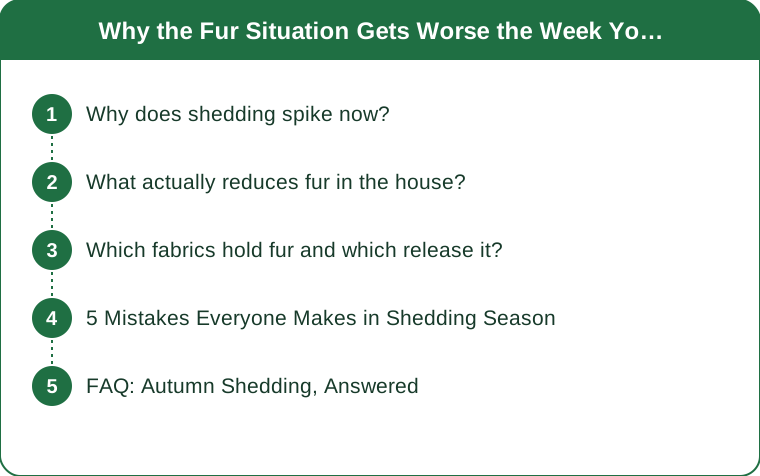
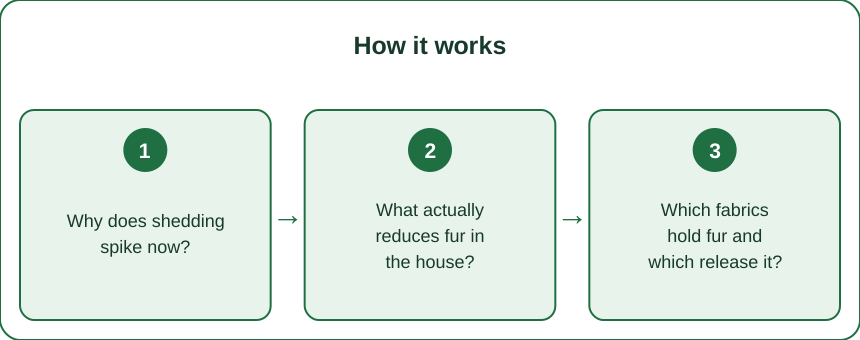
Why does shedding spike now?
Coat change is driven by daylight, not temperature, which is why it starts before it gets cold.
The trigger is photoperiod. Changing day length signals coat change in most double-coated animals. The shortening days of late August and September start the autumn moult, and it happens regardless of how warm it still is.
What the autumn moult involves. The lighter summer coat is shed and replaced with a denser winter one. In double-coated breeds this means a substantial volume of undercoat coming out over several weeks.
Why it feels worse than the spring moult. Spring shedding is often heavier in volume, but spring means open windows and outdoor time. Autumn shedding lands in a house that is being closed up, which is the actual difference.
The compounding factors:
- Windows close, so airborne fur stays in circulation instead of leaving
- Heating starts, which drops indoor humidity - often from 50 percent down toward 30 - and dry air means more static
- Static is what makes fur cling to clothing. This is the mechanism behind the sudden feeling that fur is everywhere
- Pets spend more time indoors, so shedding happens where you live rather than in a garden
- Wardrobes change to knits and wool, which hold fur far more than summer cottons and synthetics
Which reframes the problem usefully. The volume of fur has gone up somewhat. The proportion of it that ends up on you has gone up much more, and that part is addressable.
What actually reduces fur in the house?
Brushing frequency and location, in that order, and one common approach makes things worse.
Brush outdoors, and more often than seems necessary.
- Daily during a moult for double-coated animals, or every other day at minimum
- Outdoors, without exception. Indoor brushing releases a large volume of loose fur into the air of a room you then sit in. This is the single most consequential change on this list
- 10 minutes daily beats 40 minutes weekly, because the fur you remove is fur that never lands anywhere
Tools that suit an undercoat:
- An undercoat rake reaches loose undercoat that a surface brush leaves behind. The right tool for a double coat
- A slicker brush for the topcoat and for mats
- A deshedding tool, used sparingly - overuse can damage the topcoat, and once or twice a week is enough during a moult
What not to do.
- Do not shave a double-coated animal to reduce shedding. The coat insulates against heat as well as cold, and it frequently grows back with a changed texture. Discuss with a vet before any coat removal
- Do not bathe excessively. A bath during a moult does loosen fur, but frequent bathing strips oils and can worsen skin and coat condition
The nutrition and health angle, briefly:
- Adequate omega-3 fatty acids support coat condition, and a vet can advise on whether supplementation is appropriate
- Sudden excessive shedding, bald patches, or itchy skin are not seasonal and warrant a vet visit - parasites, allergies and thyroid conditions all present this way
In the house:
- Vacuum with a brush-roll designed for pet hair, more often during the moult
- A washable throw on wherever the pet sleeps, changed weekly. Concentrating the fur somewhere washable is far easier than removing it from everywhere
- Manage humidity. A humidifier, or simply drying laundry indoors, raises indoor humidity toward 40 to 50 percent and substantially reduces static cling

Which fabrics hold fur and which release it?
Fabric choice does more for your clothing than any amount of lint rolling.
Fabrics that hold fur badly:
- Fleece and polar fleece, which are the worst by a clear margin. High static and a raised surface
- Wool and wool blends, where fur works into the fibre structure rather than sitting on top
- Corduroy and velvet, where fur lodges in the pile
- Loose knits, where fur passes into the gaps between yarns
- Anything with a brushed finish
Fabrics that release fur well:
- Tightly woven cotton and cotton blends
- Smooth technical synthetics with a flat face - most activewear
- Denim, which holds surface fur but releases it easily
- Silk and satin, which release almost completely
- Leather and coated fabrics, which wipe clean
The static factor, which is the whole story in a dry heated house:
- Synthetic fabrics build static readily, and a static-charged garment attracts fur actively rather than passively
- Dryer heat increases static considerably, which is why clothing straight from a dryer is a fur magnet
- Fabric softener reduces static but affects moisture handling in activewear. For a wool coat it is fine; for training clothing it is a poor trade
- Wool dryer balls are a reasonable middle option
Practical clothing strategy for the season:
- A smooth outer layer over a fluffier inner one, so the fur-facing surface releases easily
- Keep one coat that lives by the door and accept that it collects fur, rather than trying to keep every coat clean
- A damp rubber glove wiped across fabric removes fur better than most lint rollers and costs nothing
- Hang clothing away from pet sleeping areas, and keep wardrobe doors closed - fur is airborne and settles
In the wash. A short tumble on air-only before washing removes a lot of loose fur into the lint filter. Adding half a cup of white vinegar to the rinse reduces static and helps release fur during the cycle.
5 Mistakes Everyone Makes in Shedding Season
1. Brushing indoors. It removes fur from the animal and releases a large volume into the air of a room you live in, where it settles on everything. Brushing outdoors is the same effort with a completely different outcome.
2. Ignoring humidity. Once heating starts, indoor humidity often drops from around 50 percent to near 30. Dry air means static, and static is what makes fur cling to clothing rather than fall off. Raising humidity does more than any lint roller.
3. Shaving a double-coated animal. The coat insulates against heat as well as cold, and it frequently grows back with a permanently changed texture. This is a decision to discuss with a vet, not a shedding solution.
4. Buying fleece for autumn. Fleece is the single worst fabric for holding pet fur - raised surface plus high static. A smooth outer layer over a warm inner one gets the same warmth without the fur.
5. Treating every surface equally. Trying to keep the whole house fur-free is exhausting and fails. Give the pet one comfortable washable spot and wash it weekly - concentrating the fur is far more effective than chasing it.
The common thread: people fight the fur after it has spread instead of controlling where it lands.
FAQ: Autumn Shedding, Answered
Why is my pet shedding so much in September?
Coat change is triggered by shortening daylight rather than by temperature, so the autumn moult begins while it is still warm. Closed windows and dry heated air make it more noticeable.
How often should I brush during a moult?
Daily for double-coated animals, or every other day at minimum, and always outdoors. Ten minutes daily removes far more than a long weekly session.
Which brush works for a thick undercoat?
An undercoat rake reaches the loose undercoat a surface brush leaves behind. A deshedding tool once or twice a week is useful, but overuse can damage the topcoat.
Should I shave my dog to reduce shedding?
Not without veterinary advice. A double coat insulates against heat as well as cold, and it often grows back with a permanently changed texture.
Which fabrics attract the most fur?
Fleece is the worst, followed by wool, corduroy and loose knits. Tightly woven cotton, smooth synthetics, denim and silk all release fur easily.
When is shedding a health concern?
Bald patches, itchy or inflamed skin, sudden excessive shedding outside a normal moult, or changes to coat texture. Parasites, allergies and thyroid conditions all present this way and need a vet.
TL;DR:
- Autumn moult is triggered by shortening daylight, so it starts while the weather is still warm
- Brush outdoors daily during the moult - indoor brushing redistributes fur rather than removing it
- Heating drops indoor humidity toward 30 percent, and dry air is what makes fur cling to clothing
- Fleece is the worst fabric for fur; smooth outer layers over warm inner ones solve it
- Give the pet one washable spot and wash it weekly instead of chasing fur across the house
More fur is coming out, but the bigger change is that a closed-up dry house keeps all of it. Humidity and outdoor brushing address both.
Keep Reading
This article is for general informational and styling purposes only. Fit, sizing, and product availability may vary.