Pet Hair and Fall Knits: What Actually Works
Quick Answer: Knits trap hair mechanically in the loops rather than holding it on the surface, so lint rollers underperform on them. A damp rubber glove or a rubber pet-hair brush works far better because it lifts hair out of the loops instead of pulling at the surface. In the wash, a 10-minute no-heat dryer tumble before washing removes a surprising amount, and adding half a cup of white vinegar to the rinse helps release the rest.
Autumn is a heavy shedding season for many double-coated breeds at exactly the moment your wardrobe becomes maximally hair-friendly, which is poor timing on everyone’s part.

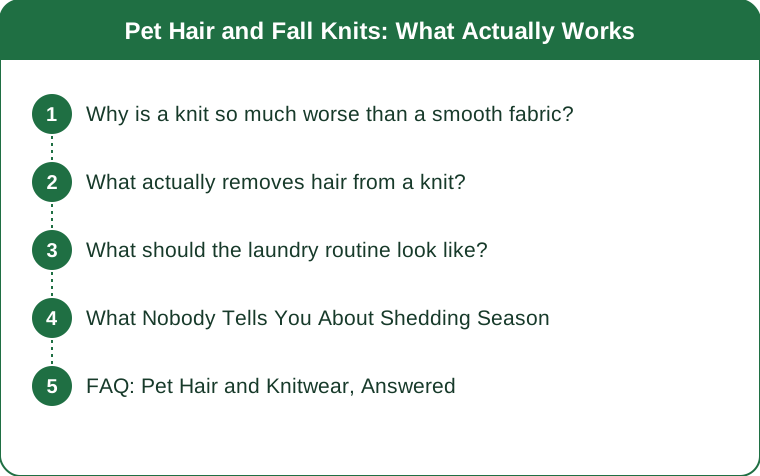
Why is a knit so much worse than a smooth fabric?
Structure. A knit is made of loops with gaps between them. Hair does not sit on top of it - it works down into the loop structure and the barbed, tapered shape of animal hair makes it resist coming back out the way it went in.
Static. Dry autumn air plus a wool or acrylic knit generates static charge, which actively attracts hair from a distance. This is why a sweater seems to collect hair from a room the dog is not currently in.
Texture. A chunky or brushed knit has enormous effective surface area compared with a smooth woven, so there is simply more for hair to catch on.
Which is why a lint roller struggles. Adhesive tape lifts what is on the surface. It cannot reach hair that is threaded through a loop, so it removes the top layer and leaves the embedded portion, giving that unsatisfying result where the sweater looks clean and then looks hairy again ten minutes later.
The methods that work all share one property: they create friction that lifts hair up and out of the structure rather than pulling straight off the surface.
What actually removes hair from a knit?
A slightly damp rubber glove. Put it on, dampen it lightly, and sweep in one direction. The rubber grips and the moisture reduces static so the hair clumps rather than scattering. This is the most effective free method and it consistently outperforms a lint roller on knits.
A rubber pet-hair brush or a squeegee. Same mechanism, purpose-built. Cheap, reusable, and it works on upholstery and car seats as well.
A pumice-style fabric stone, used gently. Very effective on sturdy knits and too aggressive for anything fine or loosely knit - test on a hem first.
A dryer tumble on air or no heat, 10 minutes, before washing. The lint trap catches an impressive amount. This is the highest-value step in the whole process and almost nobody does it in the right order.
Anti-static spray, or a light mist of water. Reduces the charge holding the hair, which makes everything else work better.
What underperforms: lint rollers on chunky knits, standard washing without a pre-tumble, and any method that pulls fibers rather than lifting them.

What should the laundry routine look like?
The order matters more than the products.
1. Tumble dry on no heat for 10 minutes before washing. Loose hair goes to the lint trap rather than into the wash water, where it would redistribute across everything.
2. Clean the lint trap, then wash. Cool water, gentle cycle, and do not overload - hair needs room to release and float free.
3. Add half a cup of white vinegar to the rinse. It softens fibers and reduces static, which helps hair let go. It does not leave a smell once dry.
4. Skip fabric softener in favor of the vinegar. Softener coats fibers and can make static worse in some fabrics, and it builds up on knits over time.
5. Clean the lint trap again after drying, and wipe the washer drum. Hair left in the drum transfers to the next load, which is how a single sweater contaminates a week of laundry.
For heavy shedding households, a dedicated pet-hair catcher in the washer helps, and running an empty hot cycle occasionally clears accumulated hair from the machine.
What Nobody Tells You About Shedding Season
Autumn shedding is a real seasonal event, not bad luck. Many double-coated breeds shed their summer coat in autumn as the winter undercoat grows in, so the volume genuinely spikes for several weeks.
Brushing the dog is the highest-leverage intervention by a wide margin. Ten minutes of brushing removes hair before it reaches any fabric. An undercoat rake during a seasonal shed pulls out remarkable quantities, and it does more for your sweaters than any laundry method.
Fabric choice matters more than removal technique. Tightly woven fabrics, smooth finishes and darker or hair-matched colors dramatically reduce the problem. If you have a light-haired pet, a navy chunky knit is a decision you are making with full information.
Static is the multiplier. In dry autumn air, a charged sweater collects hair actively rather than passively. A humidifier in the room where clothes are stored genuinely reduces the amount that accumulates.
Store knits in a closed drawer or a garment bag. Hair in a home is airborne and settles continuously. An open shelf collects it even from clothes you have not worn, which is the mystery most people never solve.
FAQ: Pet Hair and Knitwear, Answered
Is a lint roller ever the right tool?
On smooth fabrics, yes - it is fast and effective. On chunky or brushed knits it removes only the surface layer, and a damp rubber glove will outperform it every time.
Does the dryer really need to run before washing rather than after?
Yes, and this is the step people most often have backwards. Pre-wash tumbling sends loose hair to the lint trap. Once hair is in the wash water it redistributes and some of it bonds more firmly to wet fibers.
Will vinegar damage wool?
A half cup of white vinegar in the rinse is generally safe for wool and does not leave a smell once dry. For a delicate or valuable knit, dilute it further or test first, and always use cool water.
Why do my clothes get hairy even when they are in a drawer?
Pet hair is airborne and settles on everything. Closed drawers and garment bags for the knits you care about solves it, which is a much smaller intervention than most people assume is required.
TL;DR:
- Knits trap hair inside the loop structure, which is why lint rollers underperform on them.
- A slightly damp rubber glove or a rubber pet brush lifts hair out rather than pulling at the surface.
- Tumble on no heat for 10 minutes before washing, not after - it is the single most effective step.
- Half a cup of white vinegar in the rinse beats fabric softener for static and hair release.
- Brushing the pet and controlling static do more than any removal method, and closed storage keeps clean knits clean.
Autumn shedding is a few weeks of genuinely elevated volume. Ten minutes with an undercoat rake and one change to your laundry order handles most of it, and the sweaters stay in rotation.
Keep Reading
This article is for general informational and styling purposes only. Fit, sizing, and product availability may vary.