Why Pet Hair Is So Much Worse in the Car Than on Your Sofa
Quick Answer: Car seats are the worst surface in the house for pet hair because automotive upholstery is a tight, textured weave, cars build enormous static charge, and interior heat softens hair and drives it deeper. Vacuuming alone removes maybe half. What actually works is rubber friction plus moisture plus an anti-static step, in that order, and doing it before the hair has had a hot week to embed.
You can clean the sofa in ten minutes. The same amount of dog in the back of the car takes an hour and still leaves a layer.
The reason is not effort. It is that car interiors are almost purpose-built to trap hair.
Why is automotive fabric so much worse?
Three properties combine, and each one alone would be enough to cause a problem.
The weave is tight and textured. Automotive upholstery is engineered for abrasion resistance and UV stability, which means a dense weave with a slightly raised, grippy surface. Hair does not sit on top of it the way it sits on a smooth cotton sofa cover — it works between the fibres and lodges. Once a hair is barbed into a tight weave, suction alone will not pull it out, because the hair is mechanically held rather than loose.
Static charge is enormous in a car. Getting in and out of a vehicle involves sliding across a synthetic seat in synthetic clothing, which is a very efficient way to generate static. Charged fibres attract hair and hold it. This is why the same jumper picks up hair in the car and not on the sofa, and why the problem is dramatically worse in dry weather — which is exactly what heated interiors produce from autumn onward.
Heat drives it in. A car in the sun reaches high interior temperatures. Warm hair is slightly more pliable, and it settles further into a weave that is itself slightly softened. A week of hot afternoons genuinely embeds hair more deeply than a week of cool ones.
And the fourth factor, which is behavioural: dogs move around in a car, brace against seats on corners, and generate friction against the fabric constantly. That friction actively works hair into the weave rather than letting it settle on top.
What actually removes it?
A specific sequence. Doing these in the wrong order wastes most of the effort.
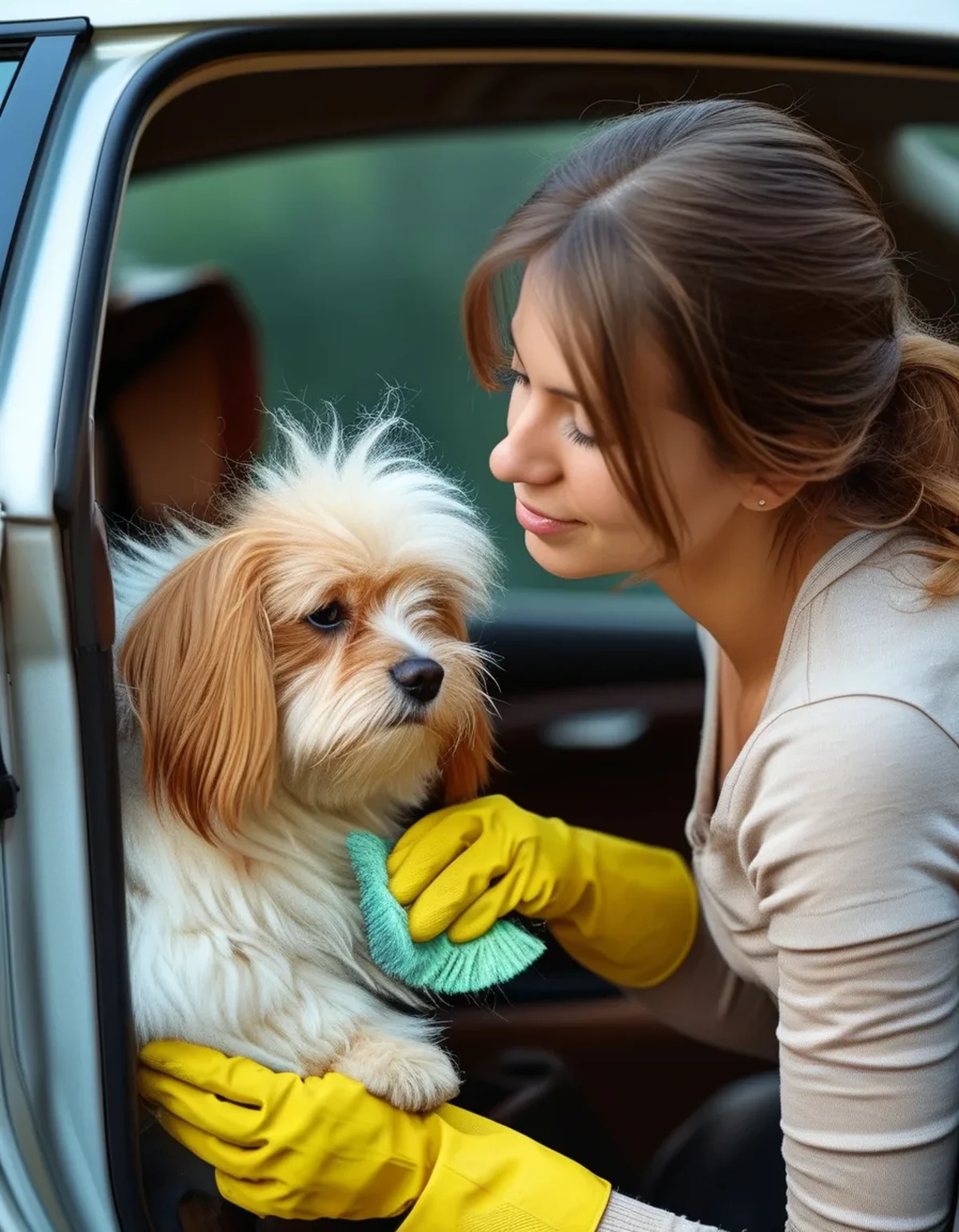
Step 1: Rubber friction, dry. A rubber glove, a rubber-bristled brush, or a squeegee blade dragged firmly across the fabric. Rubber generates static that pulls hair up and out of the weave, and the mechanical drag lifts what is embedded. Work in one direction only, sweeping the hair into a pile at the edge of the seat. Cross-hatching pushes it back in.
This single step removes far more than vacuuming does, and most people do it second or not at all.
Step 2: A lightly damp rubber glove or cloth for the stubborn areas. Moisture reduces static and gives the rubber more grip. Lightly damp, not wet — a wet seat in a closed car is a mildew problem, particularly as the weather cools.
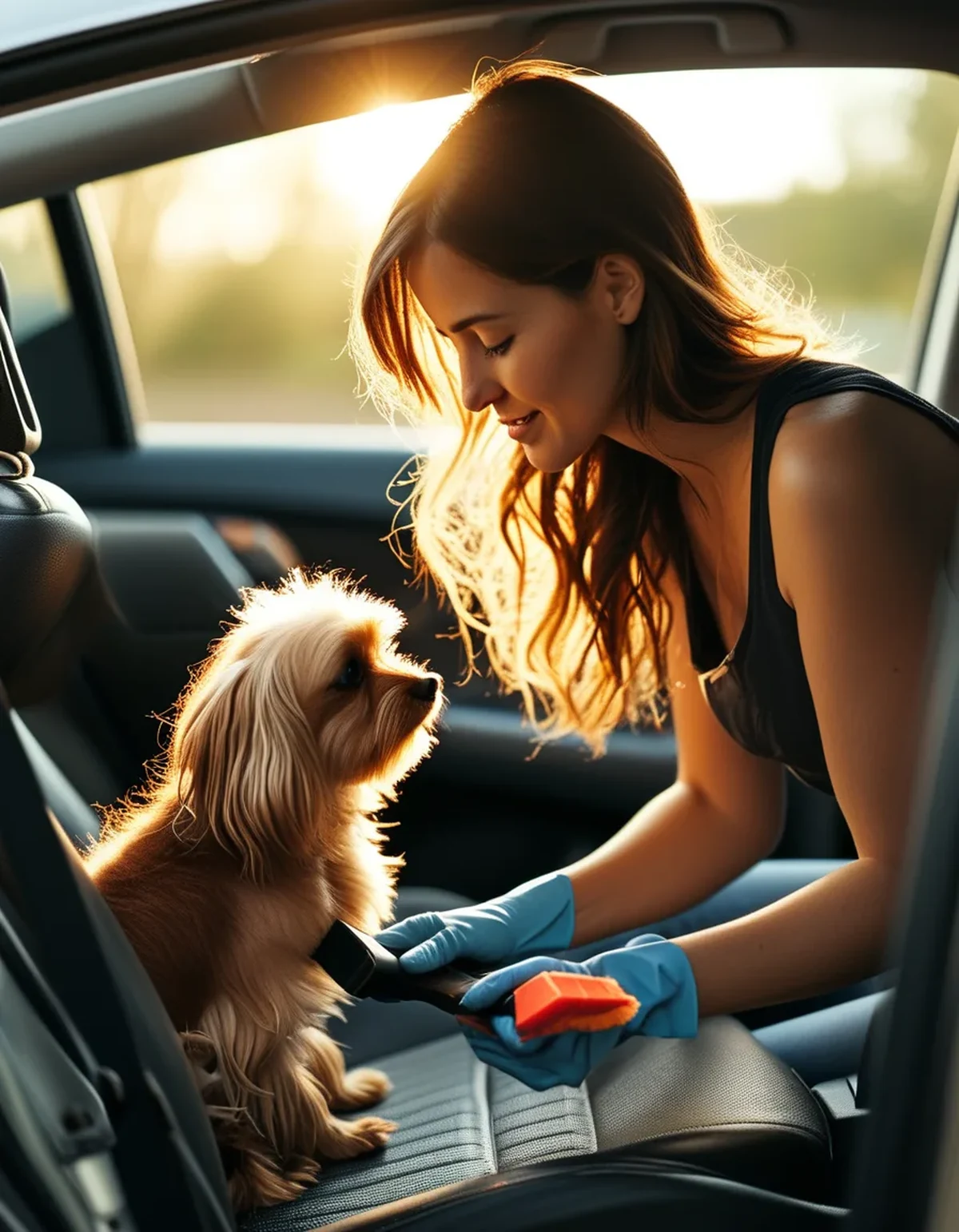
Step 3: Vacuum, with a proper attachment. Now that the hair has been lifted and gathered, suction can remove it. A brush or upholstery attachment beats a bare nozzle. Vacuuming first, before the rubber step, is why so many people conclude that vacuums do not work on pet hair.
Step 4: Anti-static, to stop it coming back. A light mist of a fabric anti-static spray, or a very dilute fabric softener solution — roughly one part softener to thirty parts water — misted lightly and allowed to dry. This reduces the charge that attracts the next round. Test on a hidden area first.
The tools worth owning: a rubber pet hair brush at around $10 does most of the work. A pumice-style stone works well on flat automotive fabric and is aggressive, so test it. Sticky rollers are for finishing, not for the main job — they exhaust quickly and cost more than they are worth on a full seat.
What Nobody Tells You About Making It Worse
Several standard approaches actively embed hair further.
Vacuuming first is the most common error. Suction across a tight weave presses loose surface hair down into it while removing only what was truly loose. Rubber first, vacuum second, always.
Cross-directional scrubbing weaves hair into the fabric like a needle. One direction, consistently, gathering into a pile.
Too much water. Soaking upholstery to lift hair leaves moisture in foam padding that takes days to dry, and in a closed car that means a smell within a week. Damp is enough.
Fabric softener sprayed heavily leaves a residue that attracts dirt and can discolour fabric over time. Very dilute, very light, or use a purpose-made anti-static product.
Waiting for the seasonal shed to finish. This is the big one right now. Most double-coated dogs shed heavily in late summer and early autumn as the coat turns over, and hair that sits in a hot car for those weeks embeds far more than hair cleaned weekly. A quick pass every week during a shed is far less total work than one heroic session afterwards.
Ignoring the boot and the seat gaps. Hair accumulates where the seat back meets the base and in the boot lining, and it redistributes every time the car moves. Cleaning the visible surface and skipping the seams means it reappears in three days.
How do you stop it in the first place?
Prevention is dramatically cheaper than removal here, more so than for any other surface in your life.
A seat cover or hammock is the complete answer. A waterproof back-seat hammock costs $30 to $60, catches everything, and can be shaken out or machine washed. This is the single highest-value purchase for anyone regularly transporting a dog, and the fact that it also protects against mud and claws makes it obvious. The main reason people resist is aesthetic, and it is worth getting over.
Brush the dog before the car, not after. Five minutes with a deshedding tool outside removes a substantial proportion of loose hair that would otherwise end up in the weave. During a heavy shed this is the difference between a manageable car and an unmanageable one.
A crate or a confined area limits the affected zone to something you can line and clean.
Anti-static treatment every few weeks, particularly through the drier heated months. Static is the mechanism that keeps re-collecting hair from the air onto the seats, and reducing it means less accumulation between cleans.
Clean weekly during a shed and monthly otherwise. Frequency is what keeps this easy. Embedded hair is hard; fresh hair is trivial.
A note on timing: the next several weeks are the annual peak for this. Double-coated breeds turn over their summer coat as daylight shortens, heated car interiors dry the air and raise static, and wet weather means damp fur that sheds and sticks more readily. Setting up a hammock now saves the whole season.
FAQ: Pet Hair in the Car, Answered
Does a specialist pet vacuum help?
Somewhat — better suction and a motorised brush head genuinely outperform a basic vacuum. It still works far better after the rubber step. No vacuum removes hair that is mechanically woven into a tight weave.
What about a car wash vacuum?
High suction, no brush agitation, so it removes loose hair well and embedded hair poorly. Do the rubber pass at home first, then use it.
Do dryer sheets work?
Rubbing a dryer sheet over upholstery does reduce static and can help lift hair, and it leaves a residue. Fine as an occasional trick, not as a routine method.
Is leather easier?
Much. Hair sits on the surface and wipes off with a damp cloth. Leather has other trade-offs with dogs — claws — but on hair alone it is dramatically easier to keep clean.
Why is it worse in winter?
Dry heated air raises static substantially, and dogs are often damp when they get in, which makes hair stick on contact and then dry in place. The combination is why the same dog seems to shed more into the car from about November.
Can embedded hair be removed permanently?
Usually yes, with a thorough rubber-and-damp-cloth pass and patience, though very old embedded hair in a textured weave sometimes never fully comes out. This is the real argument for a cover — it prevents a permanent condition rather than treating one.
TL;DR:
- Car seats trap hair because of a tight textured weave, high static and interior heat — the sofa has none of those.
- Correct order: rubber friction dry → lightly damp rubber → vacuum → anti-static. Vacuuming first pushes hair in.
- Work in one direction, gathering into a pile. Cross-hatching weaves it deeper.
- A seat hammock at $30 to $60 eliminates the problem entirely and is the obvious buy.
- Brush the dog before the car, and clean weekly during a shed rather than heroically afterwards.
Right now is the annual peak — coat turnover plus rising static. Set up a cover this week and skip the whole season of it.
Keep Reading
This article is for general informational and styling purposes only. Fit, sizing, and product availability may vary.