Why Pet Hair Loves Your Leggings (and Which Fabrics Shed It)
Quick Answer: Pet hair bonds to leggings through two mechanisms - static charge (synthetic knits build it constantly, and fine fur is light enough to fly to it) and mechanical grip (brushed, textured surfaces let hair shafts hook in like velcro). That is why buttery-soft brushed pairs are the worst offenders and smooth, dense, slick-faced knits shed hair almost completely. The countermeasures: kill the static (dryer sheet swipe, anti-static spray, humidity), choose smooth finishes for dog-adjacent wear, remove with rubber (glove or squeegee) before washing, and time your outfit around the late-August coat blow - which is happening right now.
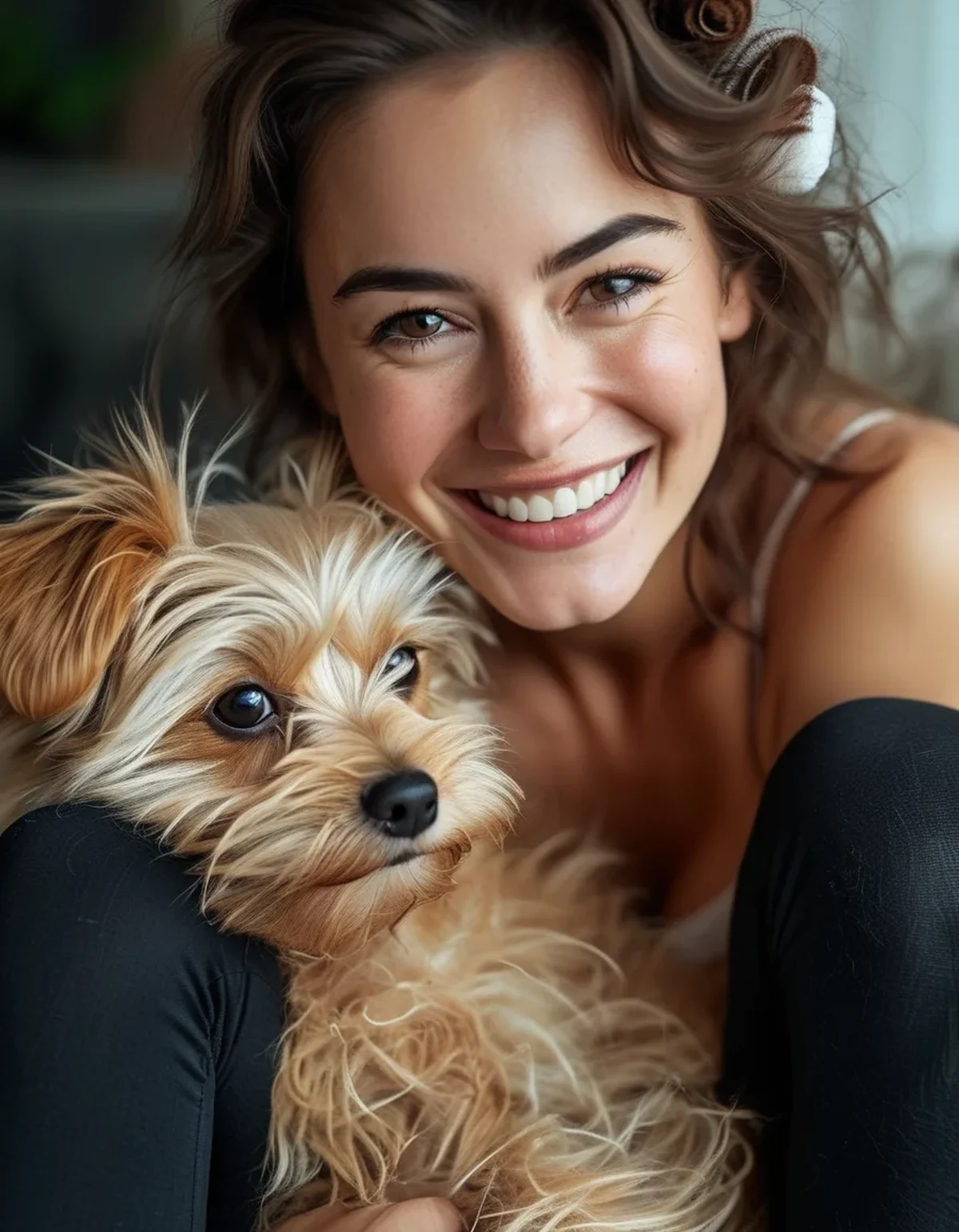
Two pairs of black leggings, one dog, one couch. Pair one arrives at the door wearing a visible second coat. Pair two brushes off with a hand swipe. The dog treated them identically - the fabrics responded differently, and once you know why, you can shop, dress, and de-hair on purpose.
What actually bonds hair to fabric?
Two forces, usually working together.
Force one: static electricity. Synthetic legging fabrics - polyester, nylon - are excellent at building and holding static charge. Every step, every couch slide, every pull-them-on friction event charges the surface, and dry air lets the charge sit there. Pet hair, meanwhile, is featherweight and carries its own charge from the pet’s movement and grooming. Result: hair does not just stick when you touch the dog - it leaps measurable distances to charged fabric. This is why your calves collect hair from a floor you merely walked across, and why the problem spikes in air-conditioned dryness and in winter.
Force two: mechanical grip. A hair shaft is not smooth - it is covered in microscopic overlapping scales, like a shingled roof, and coarse or curly fur adds bends and kinks. Fabric surfaces with raised fibers, brushed finishes, or open loops give those scales and kinks something to hook into - a velcro pairing at micro scale. Once a hair works partway into a brushed knit, friction holds it against casual brushing, which is why some pairs need a lint roller for what other pairs surrender to a palm swipe.
The two forces sort all fabrics into a matrix. Smooth and static-free sheds everything; smooth but charged attracts hair that then wipes off easily; textured but uncharged collects only by contact; textured and charged - the brushed synthetic in a dry room - is the maximum-collection quadrant where favorite winter leggings live.
And coat type sets the difficulty level. Double-coated breeds - huskies, shepherds, retrievers, corgis - shed fine, light undercoat that flies and embeds worst. Short stiff hairs (labs, beagles) work into knits like little needles and resist rollers. Curly low-shed coats mostly stay on the dog. Know your opponent: the fix list below is ordered for the fine-undercoat worst case.
Which legging fabrics shed hair best - and worst?
The ranking, from magnet to teflon.
Worst: brushed, peached, and fleece-lined knits. The buttery-soft leggings finish that feels like suede achieves that feel via raised micro-fibers - which is structurally a hair-catching surface. Fleece-lined winter pairs double down: warm, dry-season static plus maximum texture. These are glorious fabrics that should simply be assigned to low-dog days, because no amount of rolling keeps them clean in a shedding household.
Bad: ribbed and waffle textures. The grooves are hair-parking architecture - hair aligns into the channels and resists rollers, which glide over the ridges and miss the valleys. Also in this tier: loose knit loungewear and anything with a terry interior worn inside-out-ish at the cuffs.
Good: dense, smooth compression knits. The classic firm legging with a flat, tight face gives scales nothing to hook - hair lands, lies on top, and brushes off. Static still attracts hair to these, but removal is a ten-second palm-swipe rather than an archaeology project.
Best: slick-faced, tightly woven technical fabrics. Shiny-finish knits, woven nylon blends, and anything with a smooth almost-papery hand shed hair nearly completely - the surfaces are too flat to grip and often less static-prone. This is why hiking pants and woven joggers walk out of a fur household clean while the soft knits stagger out wearing a pelt.
Color is damage control, not prevention. Hair sticks to black exactly as much as to anything - it just testifies there. The heathered mid-tones - gray, taupe, mushroom - camouflage mixed fur best, and the truly strategic match their staple color to their dog: golden owners in warm tans, black-lab owners in true black. Half the problem is visibility, and visibility is negotiable.
The practical wardrobe answer: one or two smooth-faced pairs designated as dog-day and door-adjacent leggings, with the brushed favorites stored - not hung by the door, where ambient floor fur finds them - for lower-fur occasions.

Myth vs Fact: Pet Hair Edition
Myth: The lint roller is the best removal tool. Fact: Rubber beats adhesive for knits. A rubber glove swiped damp over leggings, a rubber squeegee, or a dedicated rubber pet-hair brush drags hair out of texture by friction - including the embedded hair rollers glide over - and never runs out of sheets. The roller remains the finish-and-doorway tool; rubber does the bulk work.
Myth: Shaving the dog fixes shedding. Fact: Shaving a double-coated breed damages the coat’s insulation and sun protection and does not stop undercoat production. What actually reduces airborne fur: regular brushing with an undercoat tool during shed season, which intercepts hair before the couch gets it. Ten minutes of brushing outside is an hour of lint rolling avoided.
Myth: Pet hair ruins washing machines. Fact: It clogs, not ruins - hair mats into filters and drains when heavy loads go in unshaken. The protocol: rubber-swipe or shake garments outside first, run pet items in a dedicated load, add a rinse, and clean the machine filter monthly. A wool dryer ball plus a low-heat tumble before washing also pulls impressive amounts into the lint trap.
Myth: Anti-static tricks are marketing. Fact: Static is half the bonding mechanism, so killing it visibly helps: a dryer sheet swiped over the legs, a light anti-static spray, a humidifier in the dry months, or simply a slightly damp palm before leaving. Charged fabric actively recruits hair from the air; neutral fabric only collects by contact. The physics is real and the fix costs cents.
Myth: Hypoallergenic breeds mean no hair on clothes. Fact: Lower-shedding, not non-shedding - and allergy relevance is about dander proteins, not hair length. Curly coats do drop far less onto leggings, but every dog deposits something; the fabric strategy still applies, just at a friendlier difficulty setting.
What is the full system for a shedding household?
Layered defenses, timed to the season - because late August is the season.
Know the calendar: the coat blow is now. Double-coated dogs shed on two great schedules - spring, dumping winter undercoat, and late summer into fall, swapping for the winter coat. If your black leggings have seemed suddenly furrier these past two weeks, that is not your imagination; it is the August blow. During these windows, brushing the dog every day or two with an undercoat rake intercepts the flood at its source and is the single highest-leverage act in this entire article.
Defend the wardrobe zones. Fur travels: it is on the couch, the car seat, the floor by the door - and any legging that touches those surfaces collects even if the dog never did. The rules that work: closet doors closed, clean laundry never staged on fur furniture, the door hooks reserved for the smooth-faced dog-day pairs, and one throw blanket on the dog’s couch spot that eats 80 percent of the deposit and washes weekly.
The leaving-the-house ritual, 30 seconds: rubber glove or squeegee swipe down each leg (thighs and calves - static zones - get the attention), dryer-sheet pass to neutralize charge so the car seat does not re-coat you, roller kept in the car for the arrival touch-up. This ritual is why dog owners in smooth black leggings show up at offices looking fur-free while their houses tell another story.
Laundry that actually removes hair: shake or rubber-swipe outdoors first; ten-minute no-heat dryer tumble with wool balls to harvest hair into the lint trap; then wash cold with a rinse cycle - a half-cup of white vinegar in the rinse relaxes fibers and reduces static so hair releases; hang dry, which avoids the static-generating hot tumble that re-charges the fabric for tomorrow. Clean the lint trap and machine filter on a schedule during blow season.
And recalibrate the goal. A fur household with a system is a 95-percent-clean operation, and the last five percent is the tax on living with a creature who is thrilled you exist. The leggings can be nearly clean. The couch cameo hair in every video call is canon.
FAQ: Pet Hair and Leggings, Answered
Why does pet hair stick to leggings so badly?
Two mechanisms: synthetic knits build static charge that actively attracts lightweight fur - even from the air - and textured, brushed fabric surfaces let hair shafts hook in mechanically like velcro. Brushed buttery-soft and fleece-lined pairs combine both and collect worst; smooth dense knits mostly let hair lie on top where it wipes away.
What fabric does pet hair not stick to?
Smooth, tightly constructed, slick-faced fabrics: dense compression knits, woven nylon blends, and shiny-finish technical fabrics all shed hair with a hand swipe. The avoid-list for dog-adjacent wear is anything brushed, peached, fleece-lined, ribbed, or waffled. For visibility, heathered mid-tones camouflage fur that black displays.
What is the best way to get pet hair off leggings?
Rubber first, roller second: a damp rubber glove, squeegee, or rubber pet brush swiped down the leg drags out even embedded hair, then a lint roller finishes. For laundry, shake garments out, run a no-heat dryer tumble with wool balls to harvest hair into the trap, wash cold with a vinegar rinse for static, and hang dry.
Why is there suddenly so much more dog hair in late August?
Double-coated breeds run a major seasonal shed - the coat blow - in late summer as they exchange summer coat for winter undercoat, matching the spring blow in volume. It lasts a few weeks. Daily brushing with an undercoat rake during the blow intercepts most of it before your couch, car, and leggings ever meet it.
TL;DR:
- Hair bonds by static plus texture: charged brushed knits are magnets; smooth dense faces shed with a swipe.
- Buttery-soft and fleece-lined pairs are the worst offenders - assign them to low-dog days, and door-hook the slick pairs.
- Rubber beats the roller for removal; vinegar rinse and no-heat tumbles beat the washer battle.
- Kill static cheaply: dryer-sheet swipe, anti-static spray, hang drying.
- Late August is coat-blow season - daily undercoat brushing now saves a month of lint rolling.
The dog was never going to shed less for you. But the fabric can catch less, the rubber can lift more, and the last five percent is just proof of who you live with.
See It in Motion
Seen here: High Waist Yoga Leggings with Side Pockets — shop it on bubblelime.com
Keep Reading
This article is for general informational and styling purposes only. Fit, sizing, and product availability may vary.