Why Your Dog Shadows You More as the Days Get Shorter
Quick Answer: Dogs get clingier as daylight shortens for three practical reasons: your own schedule changes, melatonin production rises with longer darkness and shifts sleep and activity patterns, and indoor time increases the number of opportunities to follow you. Most of it is normal seasonal adjustment. It is worth a vet conversation only if the clinginess arrives with new anxiety behaviors, appetite change, or house-training regression.
It is late August, the evenings are noticeably shorter than they were a month ago, and your dog has decided that the bathroom door is a place where relationships are tested.
What actually changes for a dog in late summer?
More than the temperature, and most of it is about your behavior rather than theirs.
Your routine shifts before the weather does. School restarts, work patterns change, evening plans move indoors. Dogs read routine with extraordinary precision - a 20-minute change in when you make coffee registers. A dog that follows you is often a dog checking whether the pattern still holds.
Walk timing moves. The evening walk that happened in daylight in July happens in dusk by early September. Different light, different smells, different other-dogs. Some dogs find this stimulating and some find it unsettling, and the unsettled ones stay closer at home.
Melatonin production rises with darkness. Longer nights increase melatonin, which affects sleep timing and daytime energy. Some dogs get sleepier and settle near you; others get restless in the evening in a way owners often read as neediness.
Indoor proximity multiplies opportunity. In July, your dog was on the porch. In September, you are both in the same 900 square feet, which produces more following simply because following is now possible.
Is my dog anxious or just being a dog?
The distinction is in what happens when you leave, not in how close they sit when you are home.
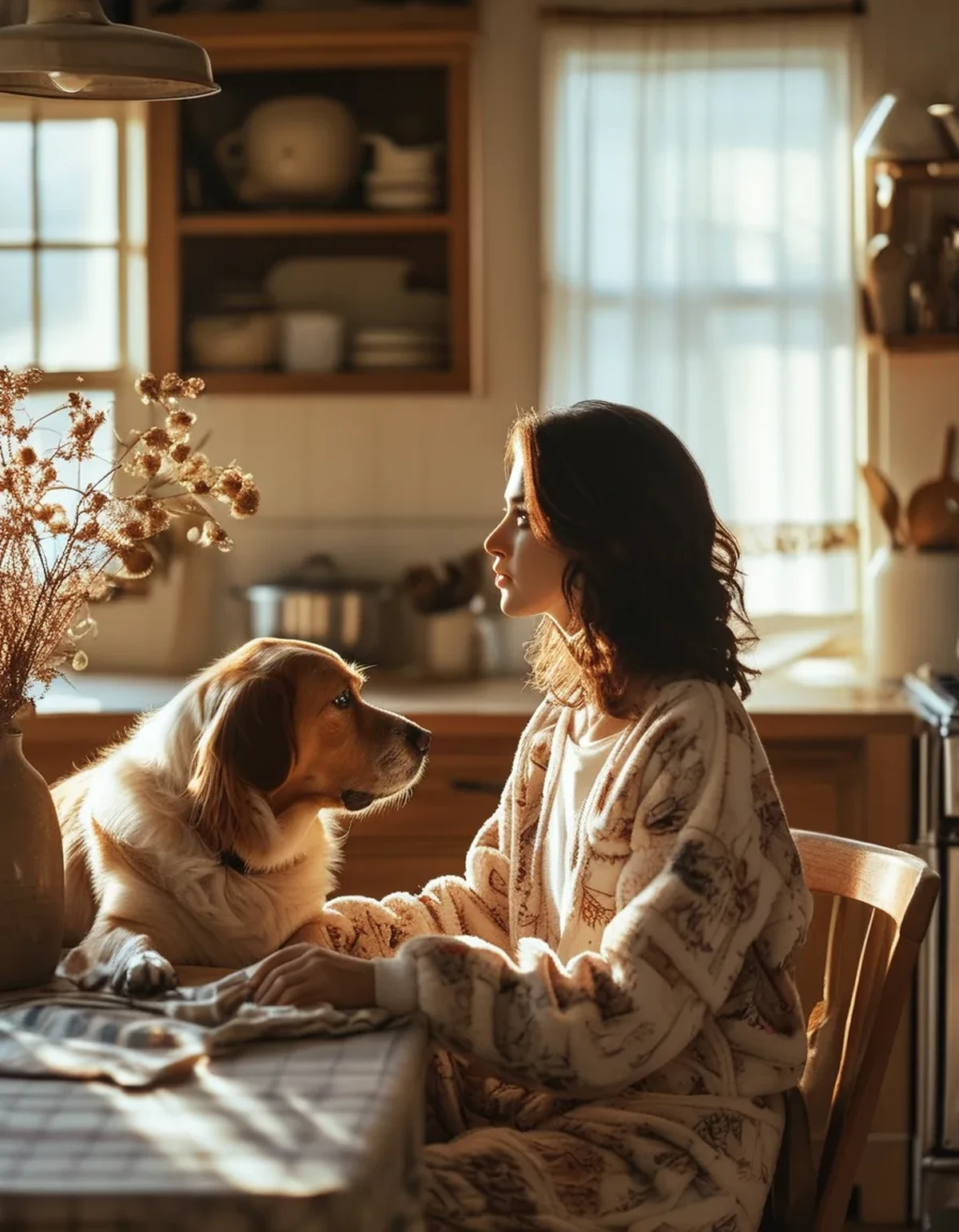
Following is normal. Dogs are social animals that evolved to stay with their group. A dog that moves rooms when you do is displaying ordinary behavior, and in most cases it is a compliment rather than a symptom.
Distress when you leave is different. Pacing before you go, vocalizing after you leave, destructive behavior at exits, or drooling and panting in your absence are separation-related signs and they deserve attention.
Watch for a cluster, not a single change. One new behavior in a seasonal transition is usually adjustment. Three or four appearing together in the same fortnight is a pattern worth acting on.
Sudden clinginess in an older dog is the one to take seriously. A dog that was independent for eight years and becomes velcro over a few weeks may be experiencing declining vision, hearing loss, pain, or early cognitive change. Age-related sensory loss makes proximity to you genuinely more reassuring - and it is easy to mistake for a personality shift.
Rule of thumb: gradual and mild in a seasonal transition is normal. Sudden, severe, or paired with physical changes gets a vet visit.
What Nobody Tells You About Seasonal Dog Behavior
Shedding peaks around now, and it affects mood. The late-summer coat change is a genuine physiological process. Dogs are often itchier and less comfortable during it, and uncomfortable dogs seek contact.
Their exercise need does not drop with the temperature. Shorter evenings tend to mean shorter walks, and a dog getting 25% less exercise looks restless and clingy rather than obviously under-exercised. Check your actual walk minutes against a month ago - most people are surprised.
Thunderstorm season overlaps. Late summer storms are a common trigger, and sound sensitivity that develops during storm season often generalizes to other noises afterward. A dog that got scared twice in August may be clingy through September.
Your smell changes with the season. Different laundry cycles, different products, less outdoor time. This sounds trivial and is not - scent is the primary channel through which a dog tracks you.
Cooler floors change where they lie. Dogs that sprawled on tile in July move to carpet and to your feet in September for warmth. Some of what looks like emotional clinginess is straightforward thermoregulation.
And they mirror your stress. Autumn schedule changes are stressful for people, and dogs pick up on elevated household tension quickly. A clingy dog in a busy month is often responding to you.
How do you settle a shadowing dog?
Give them a reason to be somewhere specific, rather than trying to stop them following.
Build a place cue. A mat or bed near where you usually are, with a reward history for settling on it, gives the dog a job. This works far better than discouraging following, because it replaces the behavior instead of blocking it.
Protect the exercise budget as light drops. If your evening walk shrank, add a morning walk or a 10-minute sniffing session in the yard. Scent work tires dogs disproportionately - fifteen minutes of nose work is worth a much longer walk in terms of settling.
Keep departures boring. No extended goodbyes, no emotional returns. The less eventful your exits, the less they need monitoring.
Add a predictable anchor to the day. One fixed event - a walk at the same time, a chew after dinner - gives a dog something to orient around when everything else has moved.
Use food puzzles in the evening. The hours between dusk and bedtime are when seasonal restlessness shows most. A frozen stuffed toy at 7pm buys a settled evening and costs three minutes to prepare.
FAQ: Clingy Dog Questions, Answered
Should I ignore my dog when they follow me?
No - ignoring following does not teach anything useful. Reward settling on a mat instead. You want to make an alternative behavior worthwhile, not make proximity unrewarding.
Can dogs get seasonal affective changes?
There is reasonable evidence that reduced daylight affects canine activity and sleep patterns, and owners commonly report lower energy in darker months. Whether it maps onto human seasonal depression is not established. Maintaining daylight exposure and exercise is sensible regardless.
My dog only follows one person in the house. Why?
Usually the person most associated with resources and routine - meals, walks, the door. It can also be the person whose schedule is most predictable, which is exactly what a dog seeking stability would choose.
When should I call the vet?
If clinginess appears suddenly, comes with appetite or toilet changes, disorientation, night restlessness, or signs of pain. In senior dogs especially, a rapid personality change deserves a check rather than a wait-and-see.
TL;DR:
- Shorter days shift your routine, their melatonin, and how much indoor time you share - all three increase following.
- Following is normal; distress when you leave is the behavior that actually matters.
- Check whether your walk minutes quietly dropped with the light - most people’s do.
- Sudden clinginess in a senior dog warrants a vet visit rather than a seasonal explanation.
The reassuring part is that most late-summer clinginess resolves once the new routine stabilizes, usually within a few weeks. The part worth acting on is the exercise budget, because that one does not fix itself - it quietly shrinks with the daylight and stays shrunk until someone notices. A mat, a fixed anchor in the day, and fifteen minutes of sniffing buys back most of what the season took.
Keep Reading
This article is for general informational and styling purposes only. Fit, sizing, and product availability may vary.