Why Your Gym Bag Is the Worst Pet Hair Trap in the House
Quick Answer: A gym bag combines the three things that make pet hair stick: a textured synthetic lining that holds a static charge, a compressed interior that presses hair into fabric, and a habit of being put on the floor where hair concentrates. It then acts as a reservoir, transferring hair to every clean item that goes in. The fix is a weekly turn-out and vacuum, storing it off the floor and closed, and putting anything you care about in a smooth-lined pouch inside it.
It is the item people never think to clean and the one most responsible for arriving at the gym covered in hair after leaving the house looking fine.
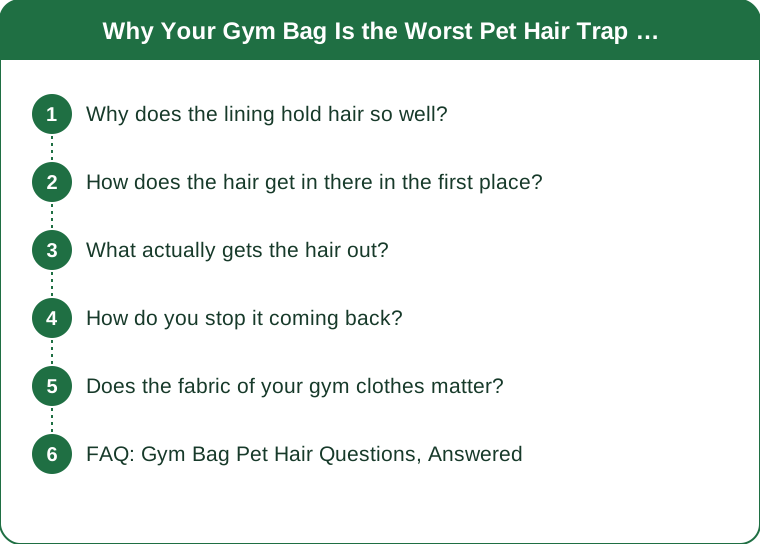
Why does the lining hold hair so well?
Three properties of gym bag interiors, all working together.
Static. Most bag linings are polyester or nylon - both strongly triboelectric, meaning they build a charge readily through friction. Pet hair, especially fine undercoat, carries an opposing charge and is electrostatically attracted. This is the dominant mechanism and it explains why the hair does not simply fall out when you tip the bag upside down.
Texture. Ripstop weaves, mesh pockets, and any brushed or fleece lining have a surface full of small hooks and gaps at exactly the scale of a hair shaft. Smooth nylon holds far less.
Compression. Everything in a gym bag is packed tightly. Hair that would sit loosely on a surface gets pressed into the weave of your clothes, which is why it survives a shake-out and sometimes a wash.
Add the humidity factor: a bag with damp kit in it is a humid environment, and damp fabric grips hair considerably better than dry fabric. So the bag you left the sweaty clothes in overnight is now optimally configured to hold hair.
How does the hair get in there in the first place?
Four routes, and the biggest one surprises people.
The floor. This is the main source and it is worth being blunt about: pet hair concentrates at floor level, and a gym bag lives on floors - by the door, in a car footwell, in a hallway, in a changing room. Every time it goes down, the base picks up.
The car boot. Frequently the single hairiest surface in a household with a dog, and frequently where the gym bag lives between sessions.
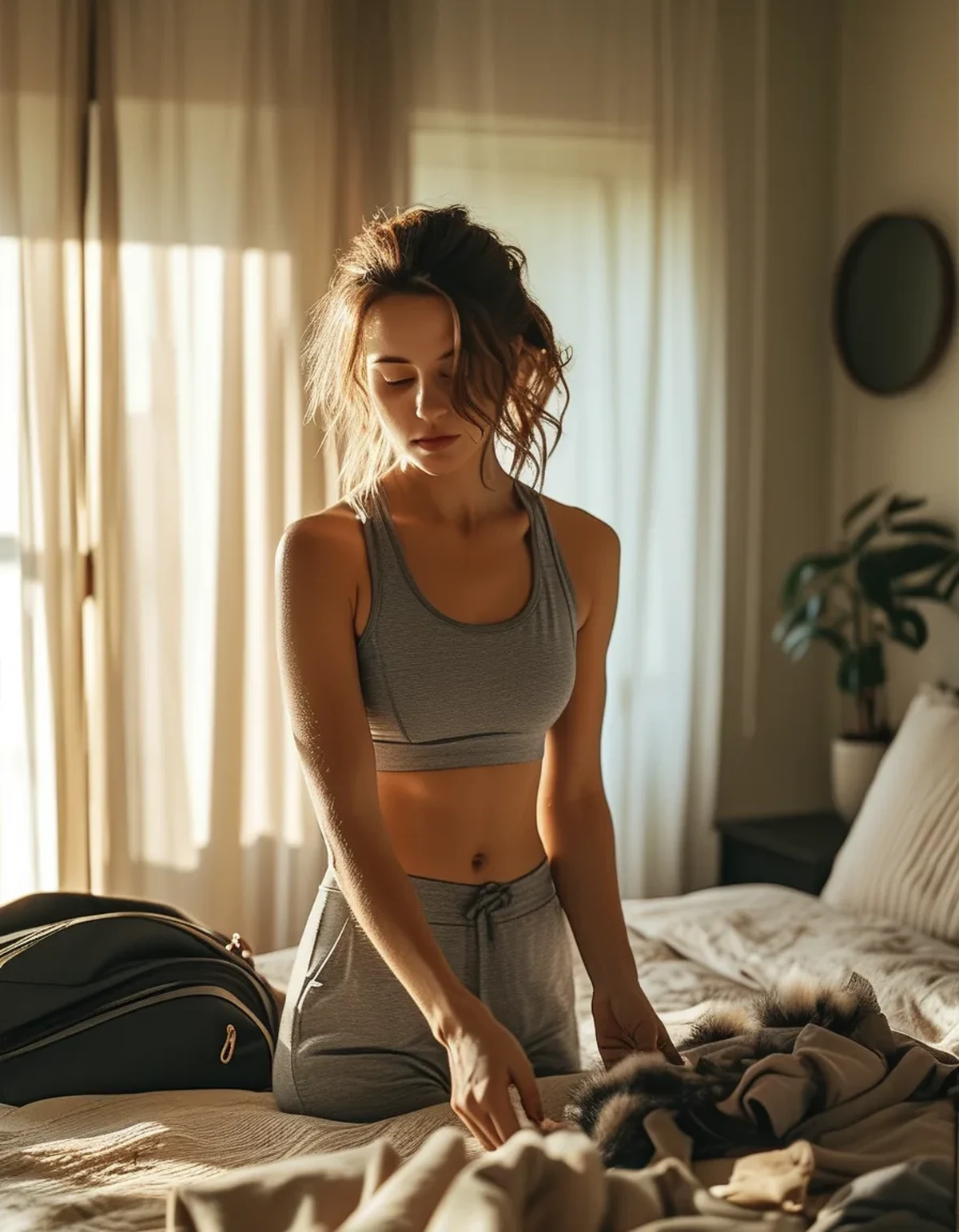
Clothes going in. Anything you wore around the house before packing carries hair in with it. A top folded on a bed where the dog sleeps arrives pre-loaded.
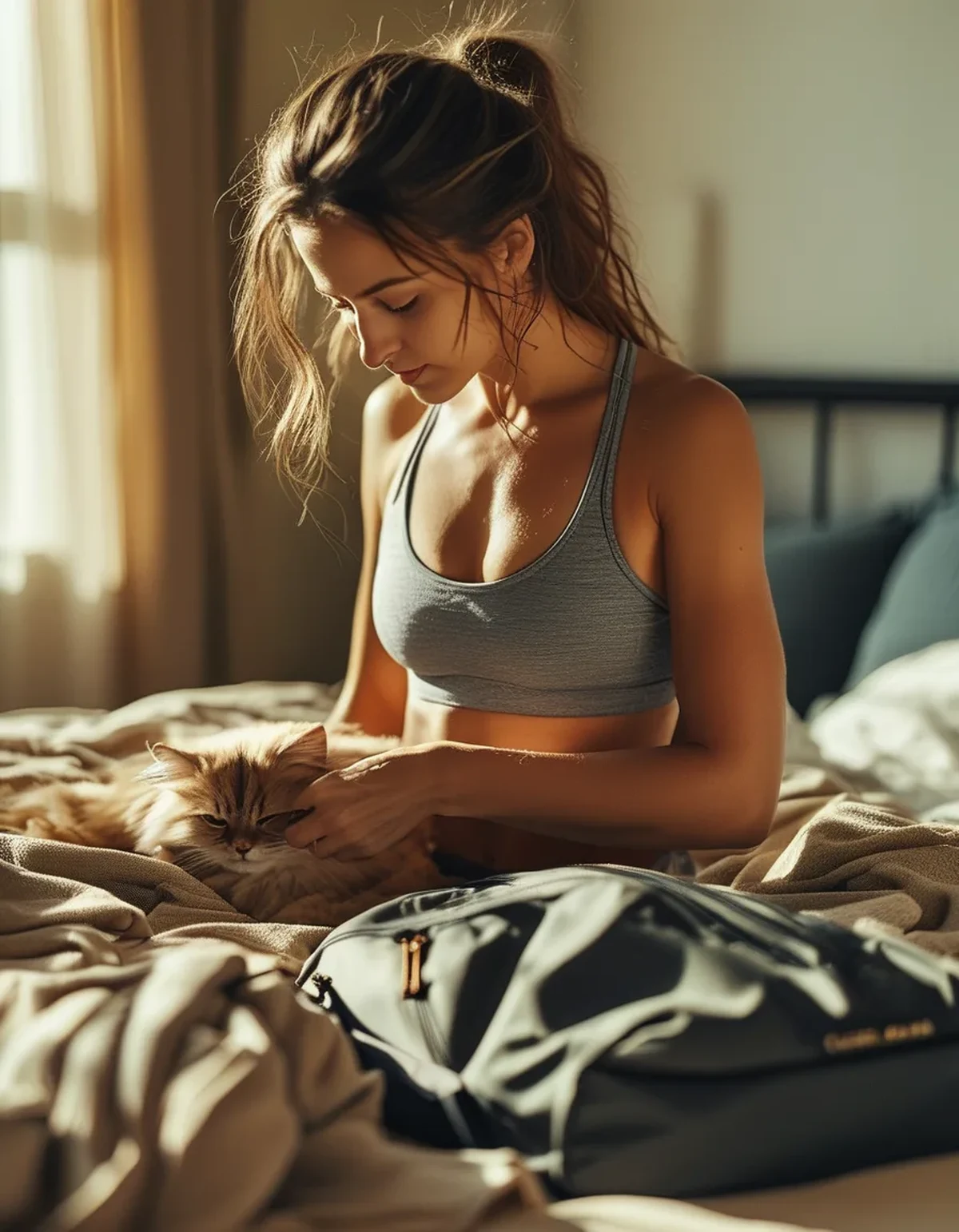
The pet itself. Some dogs and most cats will sit on or in an open bag given the chance. A bag left open on the floor is, from a cat’s point of view, an invitation.
The consequence that matters: the bag becomes a reservoir. Once the lining is loaded, it transfers to everything clean that goes in, which is why the problem feels like it regenerates no matter how carefully you launder.
What actually gets the hair out?
In order of how well they work on a bag interior specifically.
A vacuum with a brush attachment, on a turned-out bag. This is the most effective by a distance. Turn the bag inside out if it inverts, or open every pocket and go in with the crevice tool. Five minutes, weekly.
A damp rubber glove. The best tool for anything that will not invert. Rubber generates the opposite charge and drags hair into clumps. Genuinely more effective than a lint roller on textured lining, and reusable.
A rubber pet hair brush or squeegee. Same principle, purpose-built. Works particularly well on the flat base panel where hair concentrates.
Lint rollers. Fine for a quick pass on a smooth surface, poor on mesh and textured weave, and expensive over time.
Washing the bag. Do this monthly if the bag allows it - cold, gentle, in a pillowcase. Important: hair released in the wash redistributes onto whatever else is in there, so wash the bag alone. Then dry completely, which takes longer than you expect.
A dryer tumble on air-only for 10 minutes before washing, with a dryer sheet, removes a surprising amount into the lint trap and makes the wash more effective.
How do you stop it coming back?
Four habits, and the first one does most of the work.
Get the bag off the floor. A hook by the door, a shelf, the back seat instead of the boot. This single change addresses the largest source. If it must go on a floor somewhere, it should not also be the floor at home.
Store it closed. An open bag collects airborne hair continuously and invites the cat. Zip it.
Use an inner pouch for anything that matters. A smooth nylon or ripstop packing cube inside the bag gives your clean kit a low-static, low-texture environment. This is the highest-value five pounds you can spend on this problem, and it means the outer bag can stay hairy without consequence.
Pack from a hair-free surface. Fold on a hard counter rather than on a bed or a sofa. Most of the hair that ends up in the bag arrived on the clothes.
One seasonal note: late August through October is the heaviest shedding period for most double-coated dogs as the summer coat gives way to the winter one. The volume you are dealing with right now is the highest it will be all year, so a habit established in the next few weeks handles everything else easily.
Does the fabric of your gym clothes matter?
Considerably, and it is worth knowing which of your kit is the problem.
Worst: fleece, brushed inner layers, and anything with a nap. The surface is designed to trap air, which means it traps hair. A fleece-lined layer in a gym bag is a hair magnet in both directions.
Bad: ribbed knits and textured jacquards. All those channels are hair-sized.
Better: smooth, tightly woven synthetics. Standard legging knit, smooth polyester tops, anything with a slick hand feel. Hair sits on the surface and brushes off.
Best: anything with a slightly slippery finish, and darker colours if your pet is dark, lighter if your pet is light. Obvious, and it genuinely reduces how often you notice.
The one to watch: static-prone synthetics get much worse from about now onward. As indoor humidity drops with the heating going on, static builds more readily and hair clings harder. A pair of leggings that was fine in July becomes a hair magnet in October, and the fabric has not changed - the air has.
A practical fix for that: a wool dryer ball or a small amount of white vinegar in the rinse reduces static without the residue of fabric softener, which coats technical fabric and reduces its performance.
FAQ: Gym Bag Pet Hair Questions, Answered
Will washing my clothes remove the hair?
Partly, and it redistributes as much as it removes. A ten-minute air-only tumble before washing moves far more hair into the lint trap than the wash itself does.
Are there bags that are genuinely better?
Yes. Smooth-lined, unlined, or coated interiors hold much less than mesh or brushed linings. If you are replacing one, feel the inside - if it is slick, it will stay cleaner.
What about a bag that lives in the car?
That is the hardest case. Use an inner pouch, and keep a rubber brush in the door pocket. Thirty seconds before you go in beats a full clean later.
Does the hair actually matter, or is it just cosmetic?
Mostly cosmetic, with two exceptions: it clogs washing machine filters over time, and it matters if anyone you share a gym or a class with has an allergy. That second one is a reasonable argument for the inner pouch.
TL;DR:
- Gym bag linings are static-prone, textured, and compressed - the three properties that hold hair best.
- The floor and the car boot are where most of it comes from. Get the bag onto a hook.
- A damp rubber glove beats a lint roller on textured lining, and a vacuum beats both.
- Use a smooth inner pouch for clean kit and let the outer bag stay hairy.
- Shedding peaks right now - a habit built this month handles the rest of the year.
The bag is the reservoir, and cleaning your clothes without cleaning the bag is why the problem keeps coming back. Five minutes a week ends it.
See It in Motion
Seen here: High Waist Yoga Leggings with Inner Pocket — shop it on bubblelime.com
Keep Reading
This article is for general informational and styling purposes only. Fit, sizing, and product availability may vary.