Why Your Pet Sheds Hardest at the End of Summer
Quick Answer: Most double-coated pets shed twice a year, and the late-summer to early-autumn shed is triggered by shortening daylight rather than temperature. The animal is dropping a light summer undercoat to make room for a dense winter one, which means the volume of hair can rival or exceed the spring shed. It usually runs for three to six weeks starting in mid to late August in the northern US.
Daylight is the trigger, which is why it starts while the weather is still hot.

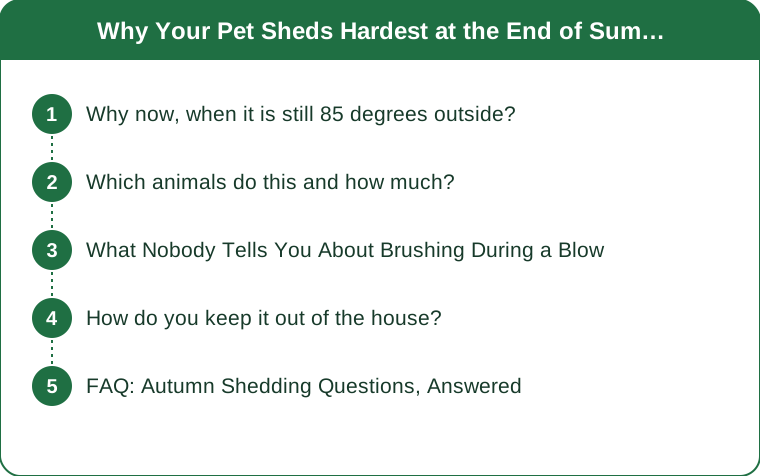
Why now, when it is still 85 degrees outside?
Because the trigger is photoperiod - day length - not temperature.
Animals track seasonal change through light exposure, detected via the eyes and mediated by melatonin production from the pineal gland. As days shorten after the summer solstice, melatonin patterns shift, and that shift signals the hair follicle cycle to move.
By mid-August in the northern US, day length has been shortening for roughly two months and the accumulated change is substantial - noticeably more than an hour of daylight lost since late June in most northern states. That is a clear enough signal for the follicles to respond, and they respond while the weather is still at its hottest.
This catches almost everyone out. The intuition is that shedding is a response to heat, so a heavy shed in August makes no sense. But the animal is not shedding because it is hot - it is shedding to grow a winter coat, and it needs to start early enough that the coat is ready before it is needed.
There is an important practical corollary: indoor pets under artificial light often shed year-round at a lower intensity rather than in two distinct bursts, because their light exposure is less seasonal. Cats especially, being largely indoor animals in many households, frequently show this pattern. If your indoor cat sheds constantly and moderately rather than seasonally, artificial lighting is likely the reason.
Which animals do this and how much?
It depends almost entirely on coat structure, which is worth knowing before assuming something is wrong.
Double-coated breeds shed the most, by a wide margin. These have a coarse outer guard coat and a dense, soft undercoat, and it is the undercoat that is exchanged seasonally. Huskies, German Shepherds, Golden Retrievers, Labradors, Corgis, Australian Shepherds, and most northern breeds are in this group. The autumn shed in these animals is sometimes called blowing coat and it can be genuinely dramatic.
Single-coated breeds shed much less seasonally. Poodles, Bichons, Maltese, and similar have hair that grows continuously rather than cycling seasonally, so they shed a small amount year-round and need clipping instead.
Short-coated breeds shed noticeably but with less total volume, since there is less undercoat to lose. Beagles, Boxers, and similar fall here.
Cats vary widely. Long-haired and double-coated cats - Maine Coons, Norwegian Forest cats, Siberians - shed heavily and seasonally. Short-haired indoor cats often shed steadily instead.
Duration is typically three to six weeks at peak, though it can extend longer in a warm autumn. The general shape is a slow start in mid-to-late August, a peak in September, and a tail-off through October.
What is not normal, and is worth a vet visit rather than a brush: bald patches, skin that is red or flaky underneath, itching that seems out of proportion, or shedding accompanied by any change in appetite or energy. Seasonal shedding is uniform thinning, not patchy loss.

What Nobody Tells You About Brushing During a Blow
The brush you use matters more than how often you use it, and most people are using the wrong one.
During a seasonal shed the hair being lost is undercoat - the soft, dense layer close to the skin. A standard bristle brush or a slicker mostly moves the topcoat and picks up what has already worked its way to the surface. It feels productive and it barely touches the actual problem.
What reaches undercoat:
- An undercoat rake. Long, widely-spaced metal teeth designed to pass through the guard coat and pull loose undercoat out. This is the correct tool for a double-coated dog in a blow, and the volume it removes compared to a slicker is startling the first time.
- A deshedding tool with a fine blade edge. Highly effective, and easy to overuse - these can damage the coat and irritate skin if pressed hard or used too often. Light pressure, and not daily.
- A slicker brush afterward, to finish and remove what the rake loosened.
Frequency during a peak shed: daily or every other day for a heavy shedder, 10 to 15 minutes. This is the single highest-return thing you can do, because hair removed on the porch is hair not in the house.
Two things worth knowing:
- Brush outside if at all possible. The difference in household hair is dramatic.
- Never shave a double-coated dog to reduce shedding. The undercoat provides insulation against heat as well as cold, and shaving can permanently damage how the coat regrows. It also does not stop shedding - it produces shorter hairs that embed in fabric more easily. This is a genuinely common and regretted mistake.
How do you keep it out of the house?
Accept that some is unavoidable, then intercept it at the highest-leverage points.
At the animal. Brushing outside is worth more than everything else on this list combined. A bath during the shed also helps considerably - warm water and a thorough dry loosens a great deal of undercoat, and a high-velocity dryer, if you have access to one at a groomer, removes an extraordinary amount in one session.
At the fabric. This is the point in the year when the seasonal overlap bites: pets shed hardest exactly when knitwear comes out, and knits are the worst fabric for holding hair. A few things that genuinely work:
- A rubber glove or a damp rubber squeegee on upholstery outperforms a lint roller substantially and costs nothing.
- A dryer cycle on air-only for 10 minutes before washing knocks a large amount of hair into the lint trap rather than into the machine.
- Fabric choice matters - tightly woven fabrics release hair much more easily than loose knits and fleece.
At the machine. Pet hair in a washing machine redistributes onto everything in the load and can clog the drain filter. Shake garments outside first, wash pet bedding separately, and clean the machine filter more often during these weeks.
At the floor. Increase vacuuming frequency during the peak weeks rather than trying harder each time. Twice-weekly light passes beat one weekly deep clean for hair specifically, because loose hair migrates and settles continuously.
And one nutritional note: coat quality is genuinely affected by diet, and omega-3 supplementation is sometimes recommended for coat health - but it will not reduce a seasonal shed, which is a photoperiod-driven cycle rather than a nutritional one. Talk to a vet before adding supplements.
FAQ: Autumn Shedding Questions, Answered
How long will this last?
Usually three to six weeks at peak intensity, starting mid-to-late August in the northern US and tailing off through October. A warm autumn can extend it. If heavy shedding continues past about eight weeks with no reduction, it is worth mentioning to a vet.
Is the autumn shed bigger than the spring one?
It varies by animal, but it is often comparable and sometimes larger. The spring shed drops a dense winter undercoat, which is more total mass; the autumn shed drops a lighter summer coat but can run longer. Most owners perceive spring as worse and autumn as more persistent.
Does an indoor cat need brushing during this?
Yes, and it is more important than people assume. Hair a cat removes by grooming is hair it swallows, and increased shedding means increased hairballs. Regular brushing during a shed measurably reduces that, which is a good reason to keep it up even with a short-haired cat.
Will air conditioning change the shedding pattern?
Barely. Since the trigger is light rather than temperature, a climate-controlled house has little effect on the timing. Artificial lighting has more influence than temperature does, which is why year-round indoor pets shed more evenly across the year.
TL;DR:
- The late-summer shed is triggered by shortening daylight, not temperature, which is why it starts while it is still hot.
- Double-coated breeds shed most; the animal is dropping a light summer undercoat to make room for a dense winter one.
- Expect three to six weeks of peak shedding from mid-to-late August, tailing off through October.
- Use an undercoat rake, not a bristle brush - the hair being lost is below the topcoat where a slicker never reaches.
- Never shave a double-coated pet; the undercoat insulates against heat too, and shorter hairs embed in fabric worse.
Brush outside, daily, for fifteen minutes. It is worth more than everything else combined.
Keep Reading
This article is for general informational and styling purposes only. Fit, sizing, and product availability may vary.